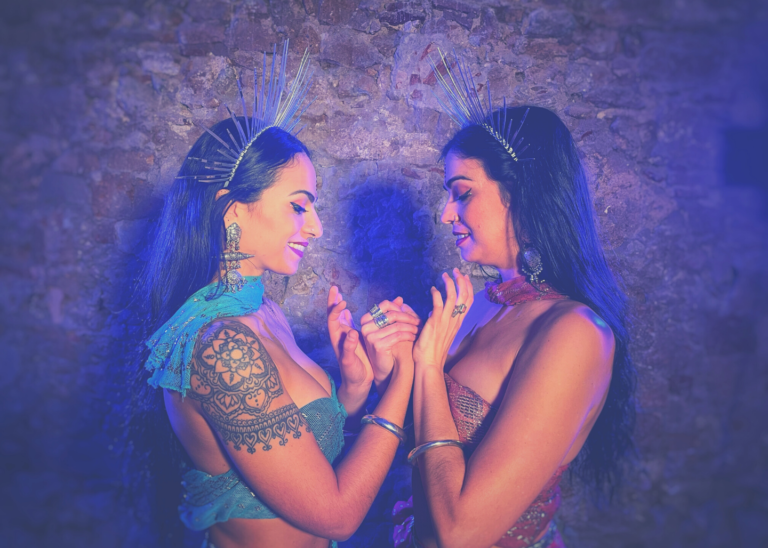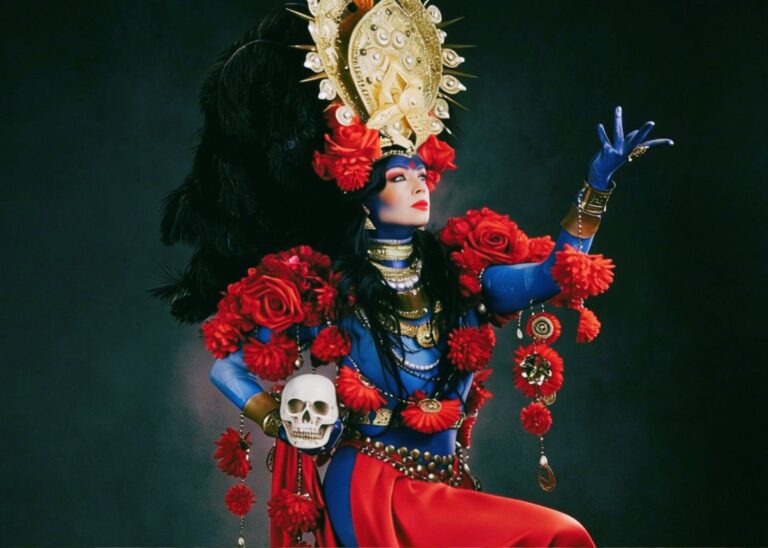

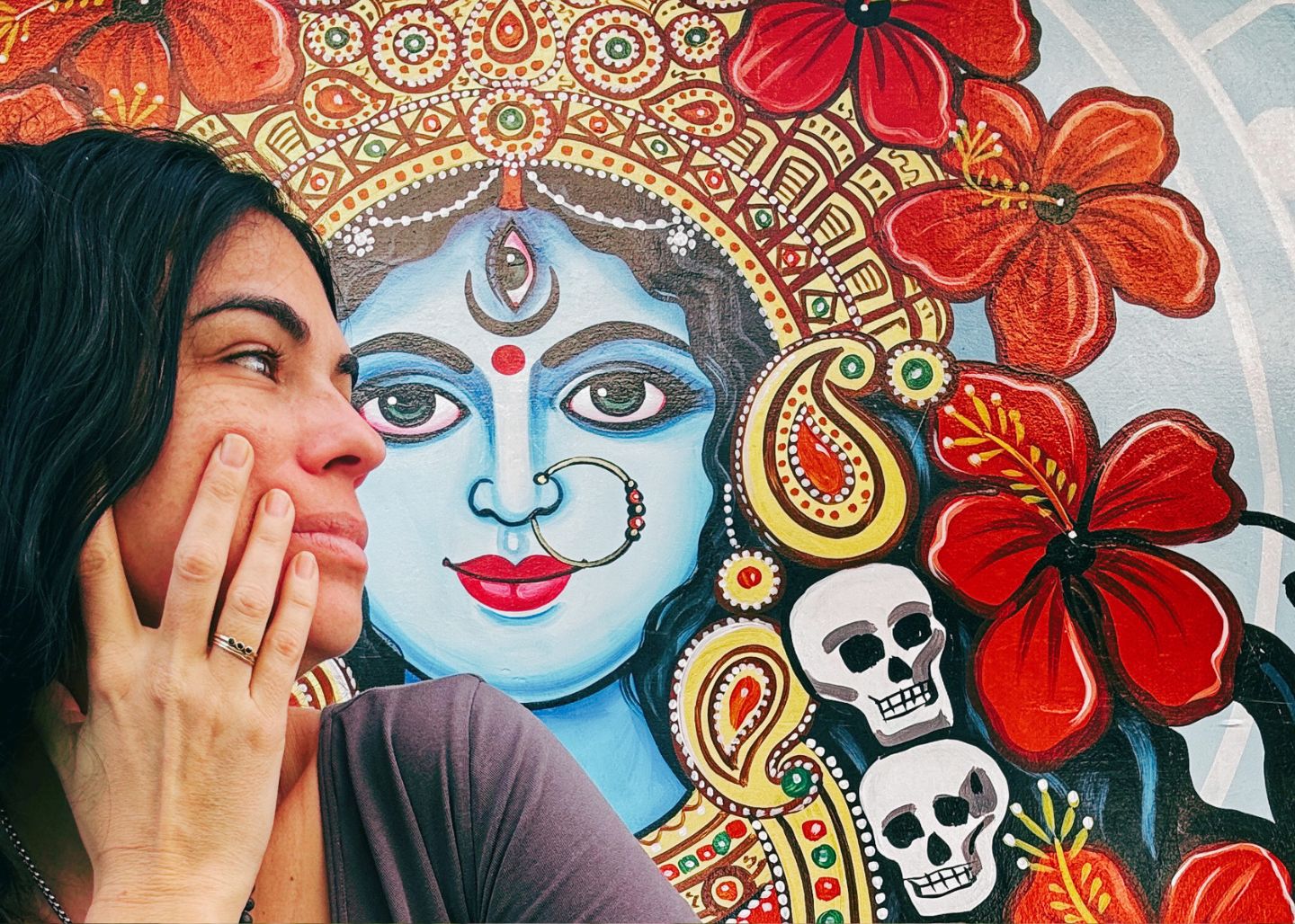
A few days ago, I found myself watching a choreography I created around 13 years ago… and I questioned myself: How I found my voice?
A good friend had reminded me of that moment, rescuing a little piece of the past from a hafla in Valencia. It was one of the first times many people there had seen me dance, and also one of the first fusion choreographies I had ever created.
It made me smile.
And it also made me think about something I have come to understand more and more over the years: an artistic voice doesn’t simply appear. It is built as we search.
That dancer was experimenting. Mixing. Exploring. Sometimes getting it right, sometimes getting it wrong. She had a strong desire to express herself, but she had no idea where all of that would eventually lead her.
Today, there are many things I would do differently.
And at the same time, I wouldn’t change a thing.
Because I needed to explore in exactly that way to arrive where I am today.
When I began exploring Indian dance, I discovered a universe that went far beyond steps, shapes and movements.
I found codes, stories, musicality, gestures, ways of understanding the body, and a relationship with dance that invited me to look far beyond execution.
Studying Odissi, my experiences in India and my exploration of other dance forms —such as Kalbelia, Oriental dance and contemporary dance— gradually expanded the way I understand movement.
For a long time, perhaps I didn’t need to have an exact answer to the question of what I was creating.
I simply needed to keep learning.
And I think there is something important in that for any creative process: sometimes we want to define our voice too soon.
We want to know what our style is, what makes us different, what we have to offer.
But before finding our own voice, we need to allow ourselves to listen to many others.
For me, approaching tradition has never meant giving up creativity.
Quite the opposite.
The deeper I have gone into the dance forms that have shaped me, the more aware I have become of everything behind a movement: its context, its history, its intention, its musicality, its relationship with the body and with space.
And that awareness has also changed the way I create.
Creating from a tradition doesn’t mean copying it. It means knowing it deeply enough to enter into a dialogue with it, with respect and awareness.
That dialogue is one of the places from which IndOriental® was born.
Not as a simple mixture of elements I happen to like, but as the result of many years of searching, studying, practising, questioning and experiencing.
India is there.
Oriental dance is there.
Kalbelia is there.
Contemporary dance is there too.
And somewhere among all of them is my own way of understanding movement.
When I watch that choreography from 13 years ago, I can recognise things that have become part of my language, and others that no longer belong to it.
And I love that.
Because it means the voice is still evolving.
Sometimes we think that finding our style means arriving at a final destination: this is who I am, this is my thing.
Today, I see it differently.
Perhaps finding your own voice has more to do with recognising what you want to keep, what you need to transform, and what you are ready to continue discovering.
Dance has taught me that the body needs time to learn.
And I believe creativity does too.
Every repetition leaves something behind.
Every stage changes something.
Every teacher opens a door.
Every journey shifts our perspective.
Every mistake makes us listen differently.
And every stage of life gives us a different body from which to create.
After more than twenty years dedicated to dance, I still feel that I am learning.
And perhaps that is one of the things I am most grateful for.
Because when we stop needing to have all the answers, space opens up for more questions.
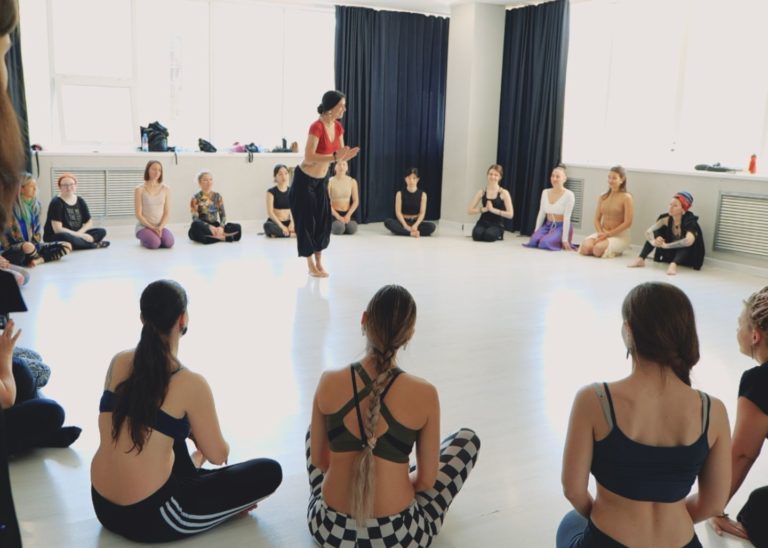
For me, teaching IndOriental® also comes from that place: from sharing a path that is still unfolding.
A path where technique matters, but so does presence.
Where knowing the roots matters, but so does finding a personal way of expressing them.
Where dancing is not simply about executing movements, but about discovering what happens when those movements begin to have something to say.
Perhaps that dancer I see in that video from 13 years ago is still with me.
Still experimenting.
Still searching.
She simply knows the path a little better now.
And she knows that she doesn’t need to reach a final destination to feel that she has found her voice.
Because your own voice is not something you find once and keep forever. It is something you continue to build as you live, learn and dare to explore.
For three days, my entire online platform will be 25% OFF, so you can freely choose any course, style or practice you wish to explore.
What’s included:
Perfect for dancers who want to choose their own path.