
We live in a time when knowledge seems to be just one click away. A short video, an inspiring sequence, or a beautiful movement can easily make us feel that we have already learned something. But dance, at least as I understand it, is not something to consume… dance is cultivated
To cultivate means giving time. Listening. Practising. Asking questions. Returning to the same gesture again and again until we realise it is not simply a beautiful shape, but an expression rooted in history, culture and intention.
After more than twenty years of dancing, I continue to study. Not because I feel there is a final destination to reach, but because every teacher, every experience and every journey reminds me that there is always another layer to discover. And that continuously transforms the way I teach.
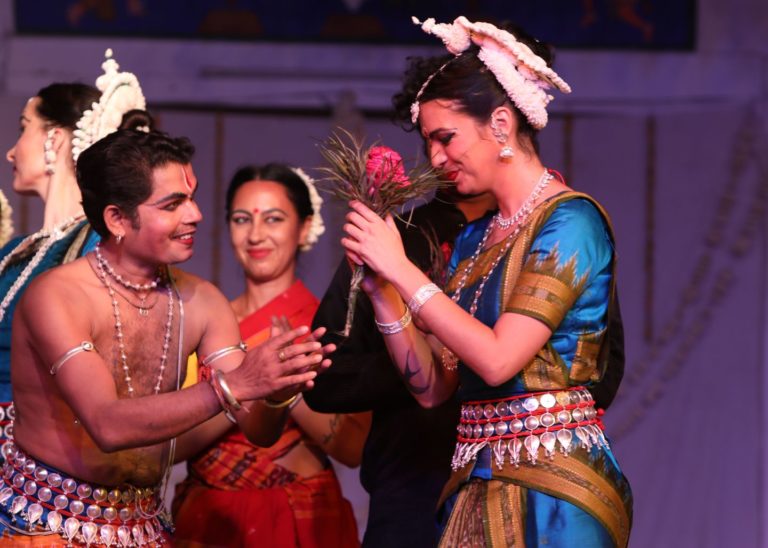
Much of this way of understanding dance was born through my encounter with India. Not only through my study of Odissi, one of India’s classical dance forms, but also through everything that country has taught me about the nature of learning itself. In the Indian tradition, learning is far more than acquiring technique; it is about cultivating an attitude. Teachers are honoured, the lineage of knowledge is acknowledged, and every gesture gains meaning when we understand the story that supports it.
This perspective deeply transformed me. I realised that learning is not about collecting movements or resources, but about allowing what we study to gradually transform us. Since then, I have tried to bring that same philosophy into every class I teach and every experience I create through IndOriental®.
With IndOriental®, my intention is not simply to teach movement. I hope to offer a space where we can understand what we are dancing, explore its context, honour the traditions that inspire it and, from that place, discover our own authentic voice.
That is why I believe respect is an essential part of learning. Respect for those who teach us. Respect for the traditions and sources that nourish us. Acknowledging where our knowledge comes from. Not as an obligation, but as an act of gratitude and integrity. Recognising those who walked the path before us never diminishes our own dance; it enriches it.
Perhaps that is the true difference between consuming dance and cultivating it.
When we cultivate, we stop collecting movements and begin building a practice with roots. A practice that transforms not only the way we dance, but also the way we observe, learn and share.
Dance can be learned in order to reproduce it. But it can also be studied in order to understand it. And when we truly understand it, it ceases to be only movement and becomes a way of being present.
For me, that is the true essence of the journey.
For three days, my entire online platform will be 25% OFF, so you can freely choose any course, style or practice you wish to explore.
What’s included:
Perfect for dancers who want to choose their own path.