
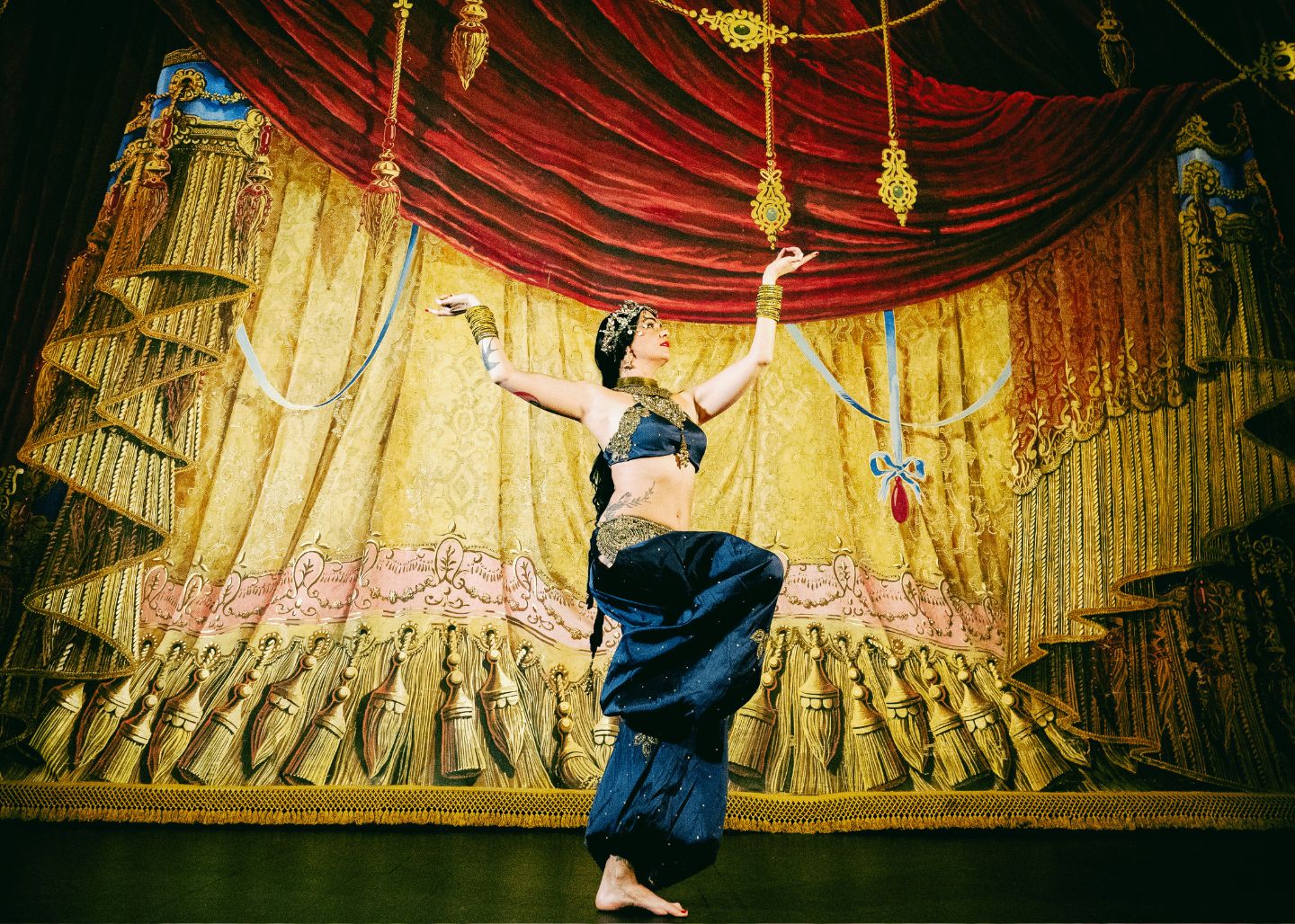
In contemporary dance — and especially in styles such as Tribal Fusion and my work within IndOriental® — there is a strong tendency toward constant creation. New music, new choreography, new concept, new premiere.
And yet, I increasingly feel the need to return to a simple but essential idea:
a piece does not end when it is premiered. That is when it begins.
The illusion of “finished work”
For a long time, choreography has been understood as a final product: created, rehearsed, performed, and then replaced by the next piece. As if the stage were the closing point.
But experience has taught me otherwise. The stage is not the end of the process — it is the first moment when the piece meets real life.
Because a dance is not complete when it has been built, but when it has been inhabited.
Repetition is not repetition
In a culture that values constant novelty, repetition can easily be misunderstood as stagnation. But in reality, it is the opposite.
Returning to a piece again and again is not repeating it — it is deepening it.
This is where the layers appear that were not visible at the beginning. Where the body stops thinking about “doing the steps correctly” and starts telling a more honest story. Where music stops being an external structure and becomes an internal, familiar place.
The piece changes because you change.
Repertoire as artistic identity
Having repertoire is not about accumulating choreographies. It is about building a living relationship with them.
Repertoire allows us to:
In my experience, the pieces that have transformed me the most are not the newest ones, but those I have returned to again and again over the years.
Time as part of choreography
Art needs time. Not only creation.
It needs duration, silence between repetitions, space for the body to forget and remember again from a different place.
Returning to a choreography months or even years later can be deeply revealing: you realize you are no longer the same dancer who created it. And therefore, the piece cannot be the same either.
This is not loss. It is evolution.
Dancing what remains
Perhaps the challenge is not to create more, but to hold more deeply what already exists.
To learn how to return. To stay. To look at a piece with new eyes without needing to replace it.
Because there is something powerful in a dance that is not consumed, but cultivated.
And there, in the space between what changes and what remains, repertoire becomes more than an archive: it becomes a form of identity.
For three days, my entire online platform will be 25% OFF, so you can freely choose any course, style or practice you wish to explore.
What’s included:
Perfect for dancers who want to choose their own path.